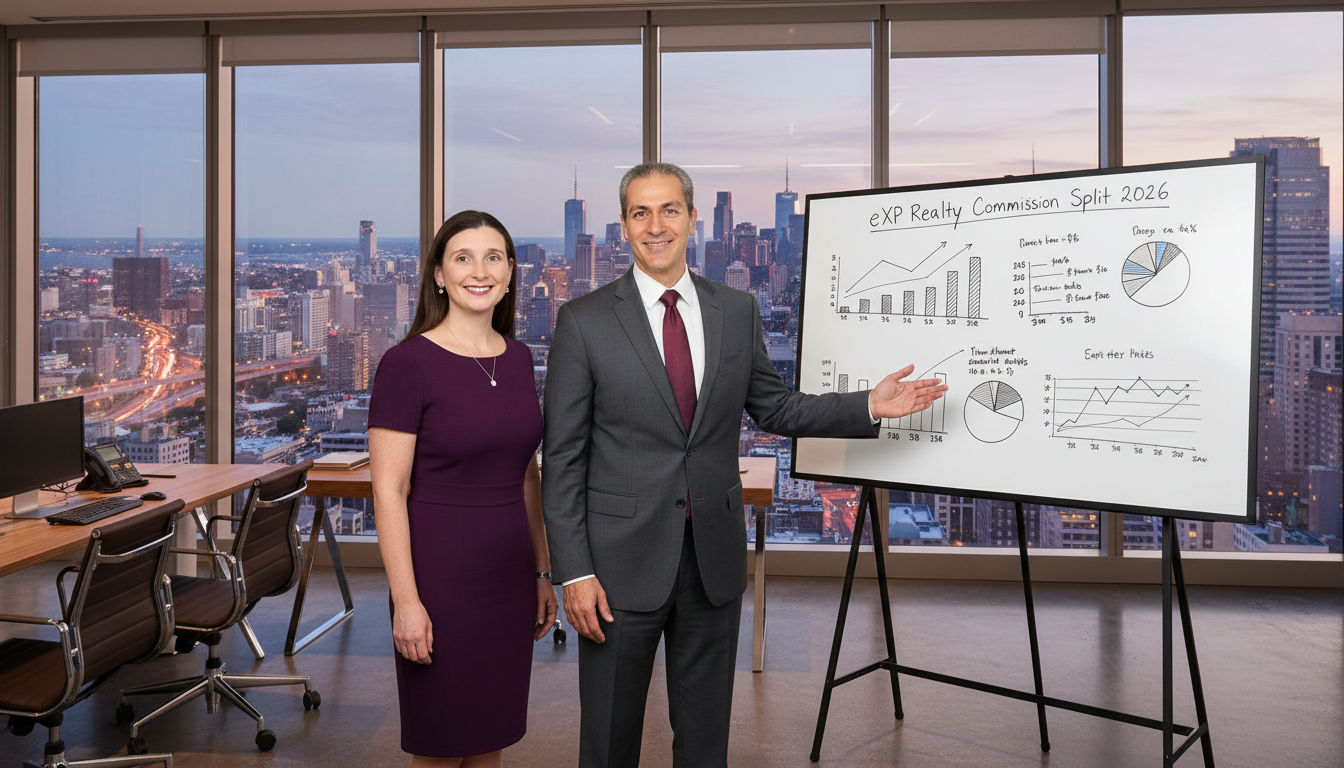
How Does the eXp Realty Commission Split & Cap Actually Work in 2026 for Wealth-Building Agents?
For ambitious real estate agents in 2026, understanding the nuances of your brokerage’s commission structure is not just about knowing your take-home pay; it’s about evaluating your long-term wealth-building potential. The eXp Realty commission split in 2026 offers a distinctive model that extends far beyond the traditional 80/20 or 70/30 split, presenting opportunities for stock equity and passive residual income. This deep dive will illuminate how eXp’s compensation plan is designed to transition agents from busy salespeople into wealthy business owners, providing a clear path to financial freedom.
As an eXp Realty ICON agent and founder of the Prosperity Agent model, Al Pinder has firsthand experience in leveraging eXp’s unique structure to build a thriving, sustainable business. Having been with eXp Realty since the very beginning of his career, Al built his entire pipeline from scratch within this ecosystem, never once needing to jump between brokerages. This journey from a revenue split deal with Realtor.com in Year 1, to buying zip codes in Year 2, and finally releasing ALL paid lead platforms by Year 3 (after a 6-month Zillow contract yielded zero conversions), is the testament to the power of a model that empowers agents to own their business, not just rent it.
At its core, the eXp Realty commission split for agents in 2026 begins with a highly competitive 80/20 split. This means agents retain 80% of their gross commission income (GCI) from each transaction, with 20% going to eXp Realty. This split is significantly more favorable than many traditional brokerages that often start at 60/40 or even 50/50, especially for newer agents.
Defining the 80/20 Split:
Agent Retention: 80% of your commission income.
Brokerage Share: 20% goes to eXp Realty, which covers access to their cloud-based platform, tools, training, and support infrastructure.
This initial split is designed to reward agents for their hard work, ensuring they keep a substantial portion of their earnings from the very first deal. But the true power of eXp’s model isn’t just in this competitive starting point; it’s in what happens next.
The concept of an annual cap is crucial to understanding the long-term financial benefits of eXp Realty. For 2026, the annual cap for most agents remains at $16,000. This means that once an agent has contributed $16,000 in commission splits to eXp within their anniversary year, they then move to a 100% commission split for the remainder of that year.
How the Cap Works:
Think of the eXp cap as a mortgage payment on your career. In a traditional brokerage, you endlessly ‘rent’ your career, paying a percentage of every single transaction indefinitely. At eXp, once you hit that $16,000 cap, you’ve essentially ‘paid off’ your annual overhead to the company, and every subsequent commission dollar is 100% yours.
Annual Cap: $16,000 per anniversary year.
100% Commission: Once the cap is met, agents keep 100% of their commission for the rest of their anniversary year.
Re-cap: The cap resets on the agent’s anniversary date each year.
This structure fundamentally shifts the agent’s mindset from a transactional employee to a business owner. It creates a powerful incentive to not just meet the cap, but to exceed it, knowing that every dollar earned after capping is entirely theirs. This is a crucial distinction that allows top-producing agents at eXp, like Al Pinder, to truly maximize their earnings and accelerate their wealth-building journey.
If you’re looking to understand the mechanics of the eXp model even further, you can explore a detailed breakdown of eXp Realty Explained on our resources page.
The eXp Realty commission structure isn’t just about cash flow; it’s about building long-term equity. One of the most compelling aspects of joining eXp is the opportunity to earn EXPI stock, the publicly traded stock of eXp World Holdings (NASDAQ: EXPI). This isn’t just a perk; it’s a strategic pathway to building significant wealth that is entirely separate from your transaction commissions.
Ways Agents Earn EXPI Stock:
First Transaction: Earn EXPI stock upon closing your first transaction each year.
Capping: Earn EXPI stock when you reach your annual commission cap.
ICON Agent Award: Top-producing agents who meet specific production and cultural contribution requirements can earn back up to their entire $16,000 cap in EXPI stock. Al Pinder, as an eXp ICON agent, has personally achieved this, demonstrating its tangible value.
Agent Attraction: Earn EXPI stock for attracting agents to the company (more on this with revenue share).
Agent Equity Program (AEP): Agents can elect to receive 5% of their gross commissions in EXPI stock at a 10% discount. This is an optional program that allows agents to essentially invest in the company at a reduced rate with every closing.
This robust stock program means that as you grow your real estate business and contribute to the company’s success, you’re not just earning commissions; you’re becoming an owner. This is a fundamental shift from traditional brokerages, where your hard work primarily benefits the brokerage owner. At eXp, your success directly contributes to your personal net worth through stock ownership.
If the commission split and stock equity are powerful, the revenue share program is the ultimate wealth-building mechanism at eXp Realty. This is the passive, residual income stream that truly sets eXp apart and is a core component of how Al Pinder coaches agents to transition from salespeople to business owners. It’s often misunderstood as ‘recruiting,’ but Al emphasizes it as ‘Agent Attraction’ – pulling, not pushing.
Understanding Revenue Share 2.0:
Revenue share is eXp’s way of rewarding agents for helping to grow the company. When an agent you attract joins eXp and closes transactions, eXp shares a portion of the commission it receives from those transactions with you. This is paid out from eXp’s 20% share, meaning it does not come out of the attracted agent’s commission.
7-Tier System: The revenue share program extends up to seven tiers, meaning you can earn revenue share from agents you directly attract (Tier 1), agents they attract (Tier 2), and so on, down through seven levels.
Immediate Unlocks: Tiers 1-3 often unlock immediately, allowing agents to start building passive income quickly.
Fast Start Attraction Bonus: In 2026, new agents attracted to eXp can benefit from a Fast Start Attraction Bonus, which can be up to $4,000 (5% of the new agent’s GCI) in their first year. This provides an additional incentive for agents to attract and mentor new talent.
Willable Asset: Crucially, revenue share is WILLABLE. This means you can designate your revenue share income to be passed down to your beneficiaries, creating a genuine form of generational wealth. This is virtually unheard of in traditional real estate models, where your income stops the moment you do.
This system allows agents to build a business that can generate income even when they’re not actively selling homes. It’s the ultimate expression of building a business you don’t have to escape from, providing financial security and a lasting legacy. For Al Pinder, this was a pivotal factor in his commitment to eXp, recognizing it as the only model offering truly passive and generational wealth opportunities for agents.
To truly appreciate the value of the eXp Realty commission split for 2026, it’s essential to compare it against what many agents experience in traditional brokerage models. The differences are stark, particularly when viewed through the lens of long-term wealth creation.
Brokerage Models & Wealth Potential:
Feature
Traditional Brokerage (e.g., Coldwell Banker, KW)
100% Commission Brokerage (e.g., some boutique firms)
eXp Realty Model (2026)
Commission Split
Often 50/50 to 70/30 (brokerage keeps 50-30%)
100% after hefty monthly fees
80/20 (agent keeps 80%)
Annual Cap
Typically none; splits continue indefinitely
N/A (flat fees instead)
$16,000 (then 100% for the year)
Stock Equity
Rare or non-existent
Non-existent
Earn EXPI stock at milestones (ICON, capping, attraction)
Passive Income Stream
Non-existent (unless you own a brokerage)
Non-existent
Revenue Share (willable, 7-tiers)
Support & Training
Varies, often localized
Minimal; agents responsible for everything
Extensive cloud-based tools, 80+ hours/week live training, global community
Cost Structure
High splits, desk fees, sometimes transaction fees
$500-$1800/month flat fee, plus hidden costs (CRM, tech)
While 100% commission brokerages might sound appealing at first, they often come with hidden costs and a significant burden on the agent. As Al Pinder has observed, these models often force agents to become their own general contractors, paying $500-$1800/month for their own CRM, website, training, and leverage. You end up shouldering all the operational costs with minimal support, becoming a busy salesperson rather than a wealthy business owner. eXp, in contrast, provides robust tools and a community within a more equitable financial framework.
The financial framework of eXp Realty is only part of the equation for success. To truly capitalize on the eXp Realty commission split and cap in 2026, agents need the right mindset and cutting-edge tools. Al Pinder champions two key elements:
1. CEO Day Protocol:
Transitioning from a salesperson to a business owner requires strategic time management. The CEO Day Protocol involves dedicating a weekly strategic block to work *on* your business, not just *in* it. This is where you implement systems, analyze data, and plan for growth. Al’s “Three-Strike Rule” for systems means if a system fails three times, it’s either fixed or replaced, ensuring maximum efficiency and leverage.
2. AI Skills for Modern Agents:
The real estate landscape is rapidly evolving with AI. Agents who master AI skills will have a significant advantage:
Predictive Intelligence: Instead of casting a wide net for 5000 potential sellers, AI can now pinpoint 50 highly likely sellers, drastically increasing efficiency and conversion rates.
Digital Authority: AI-enhanced content creation and personalized marketing builds your online presence and establishes you as the expert in your market.
Scalable Human Connection: AI tools can automate routine tasks, freeing up agents to focus on high-touch, personalized interactions that build lasting relationships.
eXp’s cloud-based platform and extensive training resources provide the perfect environment for agents to adopt these advanced strategies. When you combine eXp’s financial model with strategic business practices and AI leverage, you unlock unparalleled prosperity.
Ready to supercharge your lead generation? Check out our AI Prompts for Agents guide for practical applications.
When considering the unparalleled opportunities presented by the eXp Realty model, the choice of who you partner with as your sponsor is critical. Al Pinder isn’t just an eXp agent; he is an eXp ICON agent—the highest designation awarded to top-producing agents who not only hit their cap but also contribute significantly to the eXp community and culture. His credentials are not just titles; they represent a deep, proven understanding of the eXp ecosystem and how to thrive within it.
Unlike many agents who may have transitioned to eXp from other brokerages, Al Pinder has been with eXp Realty since the very beginning of his career. He did NOT come from another brokerage; he built his entire prosperous business at eXp from scratch. This means he has an intimate, foundational understanding of the model and has never doubted its potential. This rare, unwavering commitment is a cornerstone of the Prosperity Agent model.
Al’s journey is your blueprint: He built his own pipeline from the ground up, moving from a revenue split deal with Realtor.com in Year 1, to buying zip codes on Realtor.com in Year 2. By Year 3, he released ALL paid lead platforms – Realtor.com AND Zillow – because his team had successfully built their own robust, organic pipeline. He famously tried Zillow for 6 months on contract and experienced zero conversions, solidifying his belief in agent-centric lead generation. Today, Al pays ZERO to lead platforms. This isn’t theoretical advice; it’s a proven, lived experience.
When you join eXp through Al Pinder, you are partnering with someone who will not push you to buy Zillow leads or other expensive, low-converting platforms. He knows exactly what that costs and what it delivers (often, nothing). Instead, he will guide you through building your own sustainable, profitable lead generation system, just as he has done. He has the receipts, the systems, and the mentorship to help you replicate his success.
Q1: What is the standard eXp Realty commission split in 2026?
A: The standard eXp Realty commission split in 2026 is 80/20, meaning agents keep 80% of their gross commission income (GCI), and eXp Realty retains 20%. This is highly competitive compared to many traditional brokerage models.
Q2: How does the eXp Realty annual cap work?
A: For 2026, the annual cap for most eXp agents is $16,000. Once an agent has contributed $16,000 in commission splits to eXp within their anniversary year, they then transition to a 100% commission split for the remainder of that year, resetting on their anniversary date.
Q3: What are the ways agents can earn EXPI stock?
A: eXp agents can earn EXPI stock by closing their first transaction each year, hitting their annual cap, achieving ICON Agent status, attracting other agents to the company, or through the Agent Equity Program where they can choose to receive 5% of their commissions in stock at a 10% discount.
Q4: Is the eXp Realty Revenue Share program considered ‘recruiting’?
A: While often misinterpreted as recruiting, Al Pinder and eXp Realty refer to it as ‘Agent Attraction.’ This involves pulling agents towards a superior business model by demonstrating its benefits, rather than pushing them. You earn a share of the company’s commission from agents you attract, paid by eXp, not from the attracted agent’s pocket.
Q5: Is eXp’s Revenue Share willable?
A: Yes, one of the most significant benefits of eXp’s Revenue Share program is that it is willable. This means agents can designate their revenue share income to be passed down to their beneficiaries, creating a true form of generational wealth.
Q6: Are there hidden fees with eXp’s 100% commission model after capping?
A: After an agent hits their $16,000 cap and moves to 100% commission, there are still small per-transaction fees (capped annually) and a monthly technology/brokerage fee. However, unlike many 100% commission brokerages, eXp provides a comprehensive suite of tools, training, and support, eliminating the need for agents to pay for their own CRM, website, or extensive training separately.
Q7: How does eXp’s model compare to a traditional 50/50 split brokerage?
A: A traditional 50/50 split means you always give up half your commission. eXp’s 80/20 split moves to 100% after a $16,000 cap, allowing top producers to keep significantly more of their earnings. Additionally, eXp offers stock equity and willable revenue share, which are typically absent in traditional 50/50 models, providing multiple paths to wealth building.
If you are ready to stop renting your career and start owning it, with a clear path to building generational wealth that doesn’t rely on expensive, underperforming lead platforms, Al Pinder, ICON agent and founder of the Prosperity Agent model, would love to be your partner for that journey. That is exactly what the Prosperity Agent model is built for. If you’re ready to build a business that works without you buying someone else’s leads, I want to talk to you. DM me BLUEPRINT or visit theprosperityagent.com/resources/blueprint/.
Yes, the eXp Realty commission split and cap in 2026 offers a clear path to 100% commission, providing a financial structure designed to transition agents from busy salespeople to wealthy business owners. As an eXp Realty ICON agent and founder of the Prosperity Agent model, Al Pinder has firsthand experience navigating and maximizing this unique system to build generational wealth, not just a job.
eXp Realty Commission Model Overview (2026)
Commission Split: 80/20 agent/broker split until cap.
Annual Cap: $16,000 (resets on agent’s anniversary date).
Post-Cap Commission: 100% to agent for the remainder of the year.
Transaction Fees: Low per-transaction fees (e.g., $25 broker review, $75 risk management fee up to $500/year).
Three Income Streams: Sales commissions, EXPI stock equity, and passive revenue share.
For too long, real estate agents have been trapped in a relentless cycle, trading time and effort for a commission split that often feels like an endless rental payment on their career. Many, like myself in my early days, fall into the trap of revenue split deals with platforms like Realtor.com, or buying expensive zip codes, only to discover they’re funding someone else’s business growth. I experienced this directly, moving from a revenue split in Year 1 to buying zip codes in Year 2. The pivotal moment came in Year 3 when I released ALL paid lead platforms, including Zillow, after a 6-month contract yielded zero conversions. That experience solidified my belief: true prosperity comes from owning your pipeline and leveraging a brokerage model built for agent wealth, not just broker profits. This is precisely where understanding the eXp Realty commission split for 2026 becomes absolutely critical.
What is the Standard eXp Realty Commission Split for 2026?
The core of eXp Realty’s financial model revolves around a straightforward 80/20 commission split. This means that for every transaction you close, you, the agent, receive 80% of the gross commission, and eXp Realty retains 20%. This split continues until you, the agent, contribute a total of $16,000 to eXp in commission splits within your 12-month anniversary year. This $16,000 contribution is what we call your ‘annual cap’.
Let’s break down what this looks like in practical terms for the eXp Realty commission split in 2026. If you close a deal where the gross commission is $10,000, you would receive $8,000, and $2,000 would go to eXp. This continues, transaction after transaction, until your accumulated 20% contributions reach the $16,000 cap. Once you hit that cap, something truly transformative happens: you move to a 100% commission split for the remainder of your anniversary year.
This structure is designed to reward productive agents significantly. As an ICON agent, I’ve seen how this model empowers top producers to keep substantially more of their hard-earned money. It’s a stark contrast to traditional models where the broker consistently takes a large percentage, regardless of your production level. This isn’t just a higher split; it’s a strategic pathway to maximize your income and accelerate your wealth-building journey.
Alongside the split, there are minimal transaction fees. For example, a small broker review fee (often $25) and a risk management fee (typically $75, capped at $500 annually) are standard. These fees are transparent and significantly less burdensome than the hidden costs often found at other brokerages.
How Does the eXp Realty Cap Work in 2026?
Understanding the eXp Realty cap is crucial, and it’s where many agents miss the profound financial advantage. As mentioned, the annual cap for 2026 is $16,000. This cap resets every 12 months on your anniversary date with eXp. What makes this so powerful is the analogy I often use: traditional commission splits are like RENTING your career, but the eXp cap is like a MORTGAGE. When you rent, you pay indefinitely with no equity. When you pay a mortgage, you’re building an asset, and eventually, you own it outright.
With eXp, once you’ve contributed $16,000 in gross commission split to the company within your anniversary year, you’ve ‘paid off your mortgage’ for that year. From that point forward, every single transaction you close for the rest of that 12-month period brings you 100% of your commission. This means significant savings and increased profitability for active agents.
Consider the cumulative effect. An agent selling several homes annually can quickly hit the cap and then enjoy a full 100% commission on subsequent sales. This dramatically impacts your take-home pay and, more importantly, your ability to reinvest in your business, your family, or your personal wealth-building strategies. As Al Pinder, ICON agent, I’ve directly experienced how hitting that cap transforms an agent’s financial outlook, making it a powerful incentive to focus on production and strategic business growth.
Beyond Commissions: Understanding eXp’s Three Income Streams
While the favorable eXp Realty commission split is a major draw, what truly differentiates eXp and empowers agents to build real wealth are the three distinct income streams available:
Sales Commissions: This is the primary income, earned through your direct real estate transactions, following the 80/20 split and $16,000 cap model. Once you cap, you move to 100% commission, drastically increasing your take-home pay.
EXPI Stock Equity: eXp offers agents multiple opportunities to earn shares of EXPI stock, the publicly traded parent company, eXp World Holdings. You can earn stock for your first transaction, for hitting your annual cap, and for attracting other agents to the company (your direct sponsored agents). The ICON Agent Program, which I’ve achieved, offers up to $16,000 in EXPI stock back to top-producing agents who cap and meet certain cultural contribution goals. This means your hard work isn’t just generating commissions; it’s building a valuable equity stake in the company you help grow.
Revenue Share: This is perhaps the most revolutionary aspect of the eXp model and what truly transforms agents into business owners. eXp shares a percentage of its gross commission income with agents who attract other productive agents to the brokerage. This is NOT recruiting in the traditional sense; it’s Agent Attraction. When an agent you sponsor closes a transaction, eXp shares a portion of the 20% it keeps with you, paid out over seven tiers. This creates a passive, residual income stream that can grow significantly over time.
These three streams work in synergy, allowing agents to diversify their income and build a robust financial portfolio. It’s a foundational element of the Prosperity Agent model: moving beyond a single, transactional income source to create multiple, compounding streams of wealth.
Comparing eXp: Why Traditional Splits Are Like Renting Your Career
Let’s be brutally honest about traditional brokerage models. Many operate on a high split, often 50/50 or 60/40, with no cap. This means that no matter how many homes you sell, no matter how productive you become, your broker continuously takes a significant portion of your commission. It’s an endless payment with no equity build-up, just like renting an apartment indefinitely.
This ‘rental’ mindset keeps agents in a perpetual state of dependence. You’re constantly working to generate income that is then immediately split, leaving less for your savings, investments, or business growth. This is the commission treadmill I talk about, and it’s exhausting. It discourages long-term wealth building and perpetuates the idea that you’re merely a salesperson, not a business owner.
The eXp Realty model, with its eXp Realty commission split and cap in 2026, fundamentally changes this narrative. By capping out, you transition from renting to owning your commission stream for the rest of the year. This isn’t just a minor perk; it’s a paradigm shift. It frees up capital that you can then strategically deploy into marketing, professional development, or personal investments. It’s the difference between merely earning a living and actively building an asset, a wealth-generating machine that works for you.
As Al Pinder, I’ve seen countless agents achieve financial breakthroughs because of this shift. They stop feeling like an employee and start acting like a CEO of their own growing enterprise. It’s about empowering you to take control of your financial future, not just accepting the status quo.
The True Cost of 100% Commission Brokerages vs. eXp
Some agents might look at eXp’s 80/20 split and annual cap and wonder about ‘100% commission’ brokerages. On the surface, they sound appealing. No split, all for you, right? However, as an eXp Realty expert, I can tell you that the devil is in the hidden details. Many ‘100% commission’ brokerages operate on a model where you pay substantial monthly fees – often ranging from $500 to $1800 per month. This fee often covers little more than a desk and a brand name.
What you often find lacking at these brokerages is critical infrastructure: no robust CRM, limited training, little to no lead generation support, and minimal leverage. You essentially become your own general contractor for your entire business. This means you’re responsible for sourcing and paying for your own CRM (which can be hundreds of dollars a month), your own transaction coordination, your own marketing tools, and often, even your own E&O insurance. The ‘100%’ quickly diminishes when you tally up these essential business expenses.
eXp Realty, by contrast, offers a comprehensive suite of tools and support baked into its model. When you pay your $16,000 cap (or the 20% until you cap), you gain access to:
kvCORE CRM (valued at over $500/month if purchased independently)
Extensive training and mentorship (thousands of hours of live and on-demand content)
Marketing resources and design tools
A global network of agents and experts
Cloud-based office and support staff
The value proposition at eXp far exceeds what a simple ‘100% commission’ brokerage can offer. It’s not just about the split; it’s about the support, the technology, and the community that truly enable you to scale your business without becoming bogged down in operational overhead. This is the difference between simply paying less and actually getting more value for your investment in your career.
How Does eXp’s Revenue Share 2.0 Create Willable Legacy in 2026?
Revenue Share is the ultimate game-changer for building generational wealth within the real estate industry, and it’s a key reason why agents seeking true prosperity are drawn to eXp. This system allows you to earn passive, residual income by simply attracting other productive agents to eXp. It’s not about being a ‘recruiter’ but about sharing an opportunity that genuinely benefits others. Al Pinder, the Prosperity Agent, has built a model around this principle: pull, don’t push.
Here’s how the Revenue Share 2.0 model works for 2026:
7-Tier System: You earn a percentage of the gross commission paid to eXp by agents you directly sponsor, and also by agents they sponsor, all the way down seven tiers.
Immediate Unlock: Tiers 1-3 often unlock immediately, meaning you start earning revenue share from your direct sponsors (Tier 1) and their sponsors (Tier 2 and 3) right away, provided you meet minimum production requirements.
Fast Start Attraction Bonus: For agents who attract new, productive agents, eXp offers a ‘Fast Start Attraction Bonus’ of up to $4,000 (equal to 5% of the new agent’s GCI) in their first year. This incentive encourages agents to actively help their sponsored agents succeed, aligning everyone’s interests.
Willable Asset: Crucially, your revenue share stream is WILLABLE. This means you can legally designate beneficiaries to continue receiving this passive income after you pass away. Imagine being able to leave your children or grandchildren a consistent, growing income stream that isn’t dependent on them selling homes. This transforms your real estate career from a job into a genuine, generational asset.
This concept of a willable legacy is a cornerstone of The Prosperity Agent philosophy. It addresses the fundamental question: can you actually leave your real estate business to your kids, or does it just have a job that ends when you stop working? With eXp’s revenue share, the answer is a resounding yes – you can build something that truly outlives you.
The Prosperity Agent Blueprint: Building Wealth Beyond the Split
At The Prosperity Agent, we believe that optimizing your eXp Realty commission split 2026 is just the beginning. Our mission is to transition agents from busy salespeople into wealthy business owners. This requires a comprehensive approach, a ‘Blueprint’ that goes beyond just understanding commission structures. Here are some key concepts we integrate:
The Bridge the Gap Method: We guide you from your Current State (where you are now) to your Desired State (where you want to be), meticulously building The Bridge (the strategic steps) and securing your Commitment. This structured approach ensures you have a clear roadmap for growth.
CEO Day Protocol: As an ICON agent, I understand the importance of strategic time. Our CEO Day Protocol involves dedicating a weekly strategic block to work ON your business, not just IN it. This includes implementing the Three-Strike Rule for systems: if a system fails you three times, it’s either fixed or retired, ensuring maximum efficiency.
AI Skills for Modern Agents: The future of real estate is intertwined with technology. We teach agents how to leverage AI for predictive intelligence (finding 50 likely sellers, not 5000 unqualified leads), building digital authority, and creating scalable human connection. This isn’t about replacing agents but empowering them with tools that multiply their effectiveness.
Legacy Building: Every strategy we implement points towards building a business that outlives you. Revenue share is WILLABLE, creating generational wealth. This long-term vision sets our model apart.
This holistic Blueprint ensures that you’re not just earning commissions; you’re building a sustainable, scalable, and ultimately sellable or willable business asset. This is the difference between having a high-paying job and truly owning a prosperous enterprise.
Why Join With Al Pinder? Your Partner for Prosperity at eXp
The eXp Realty model is powerful, but navigating it to truly maximize your prosperity requires a trusted partner who has walked the path. When considering the eXp Realty commission split 2026 and all its benefits, the question isn’t just ‘Should I join eXp?’, but ‘Why should I join eXp through Al Pinder specifically?’
My journey is my proof:
Unwavering Commitment: I have ALWAYS been at eXp Realty. I did not come from another brokerage; I chose eXp from the beginning of my career and have never doubted that choice. I built everything at eXp from scratch, which is rare. This provides a deep, unwavering understanding of the model that someone who has bounced between brokerages cannot offer.
ICON Agent Status: I am an eXp ICON agent. This isn’t just a title; it’s the highest designation, earned by top-producing agents who close significant volume and consistently hit eXp’s cap while contributing to the company’s culture. I’ve earned it, and I know exactly what it takes to get there.
Built from Scratch, No Paid Leads: My pipeline was built from the ground up. Year 1, I did a revenue split deal with Realtor.com. Year 2, I bought zip codes on Realtor.com. But by Year 3, I released ALL of it – Realtor.com AND Zillow – because we had successfully built our own, organic pipeline. I even tried Zillow for 6 months on a contract and had zero conversions. I walked away and never looked back. Today, my team pays ZERO to lead platforms. This real-world, 3-year journey is the receipt that I am not telling agents to do something I haven’t personally done.
Your Authentic Partner: When you join with me, you are joining someone who will not push you to buy Zillow leads or other expensive platforms, because I know exactly what that costs and what it delivers (or, more often, fails to deliver). I’ve lived the frustration and built the solution. I am not a recruiter; I am a trusted partner in prosperity, and my mission is to help you build a business that truly works for you.
I understand the frustration of feeling stuck on the commission treadmill. I’ve navigated the complexities of lead generation, and I’ve built the systems that changed everything. If you are ready to build a business that works without you buying someone else’s leads, I want to talk to you. I am the specific person who has already solved the problem you are facing.
Frequently Asked Questions About eXp Realty Commission Split and Cap (2026)
Is the eXp Realty commission split competitive in 2026?
Yes, the eXp Realty commission split of 80/20, coupled with its $16,000 annual cap, is highly competitive in 2026. The ability to earn 100% commission after capping, combined with stock awards and revenue share, offers a superior financial model compared to traditional brokerages with uncapped splits or 100% brokerages with high monthly fees and limited support.
How does the eXp cap system benefit agents?
The eXp cap system significantly benefits productive agents by allowing them to keep 100% of their commissions after contributing $16,000 to the company within their anniversary year. This acts like a ‘mortgage’ on your career; once paid, your income is entirely yours for the remainder of the year, maximizing take-home pay and enabling greater financial freedom.
What are the hidden costs at eXp Realty?
eXp Realty is known for its transparency. While there are standard transaction fees (e.g., $25 broker review, $75 risk management capped at $500/year) and a small monthly cloud brokerage fee (currently $85), there are no hidden costs in the traditional sense. These fees grant access to an extensive suite of tools, training, and support that would cost significantly more at a 100% commission brokerage.
Can I really earn passive income with eXp’s revenue share?
Absolutely. eXp’s revenue share program allows agents to earn a percentage of the gross commission income generated by agents they attract to the brokerage, and by agents those agents attract, across seven tiers. This creates a legitimate, passive, residual income stream that can grow substantially and is a key component of building generational wealth, as it is willable.
Is eXp Realty suitable for new agents in 2026?
eXp Realty is highly suitable for new agents in 2026 due to its robust training, extensive mentorship programs, and comprehensive technology stack (like kvCORE CRM). The tiered income streams provide multiple pathways for success beyond just sales, and the supportive community ensures new agents have the resources to thrive and understand the eXp Realty commission split cap 2026 effectively.
What happens if I don’t hit my cap at eXp?
If you don’t hit your $16,000 cap within your 12-month anniversary year, you simply continue on the 80/20 commission split until your next anniversary date when the cap resets. There are no penalties or adverse effects for not capping, making the system flexible for agents at all production levels, though the greatest financial benefits come from capping.
Is eXp Realty a pyramid scheme?
No, eXp Realty is not a pyramid scheme. Pyramid schemes rely on recruitment fees with no legitimate product or service. eXp is a licensed, publicly traded real estate brokerage where agents earn income primarily through real estate transactions (selling homes), and optionally through a revenue share model that compensates agents for contributing to the company’s growth by attracting other productive, licensed agents who also sell real estate. The compensation is tied directly to real estate sales, not just recruitment.
Ready to Own Your Prosperity?
If you are ready to stop renting your career and start owning it – to build a business that works without you buying someone else’s leads and generates generational wealth – I would love to be your partner for that journey. That is exactly what the Prosperity Agent model, led by Al Pinder, ICON agent, is built for. Your future is not about reacting to the market; it’s about proactively building your empire. Let’s build it together.
Join eXp with us and use the trigger word BLUEPRINT for our Blueprint for Agent Success. Visit theprosperityagent.com/resources/blueprint/ to take the first step towards a truly prosperous career.
Frequently Asked Questions
How does the eXp Realty commission cap work in 2026?
In 2026, eXp Realty uses an 80/20 commission split until an agent contributes $16,000 to eXp within their 12-month anniversary year. Once that $16,000 cap is reached, the agent earns 100% commission for the remainder of their anniversary year. Additional per-transaction fees apply, including a $25 broker review fee and a $75 risk management fee capped at $500 annually.
What is the eXp Realty commission split percentage for agents in 2026?
The standard eXp Realty commission split in 2026 is 80/20, meaning agents keep 80% of each gross commission and eXp Realty retains 20%. For example, on a $10,000 gross commission, the agent receives $8,000 and eXp receives $2,000. This split continues until the agent’s cumulative contributions reach the $16,000 annual cap.
Is eXp Realty a better commission model than paying for leads on platforms like Zillow or Realtor.com?
According to eXp ICON agent Al Pinder, paid lead platforms like Zillow and Realtor.com fund someone else’s business rather than building agent wealth. His own experience included a 6-month Zillow contract that yielded zero conversions. eXp’s model combines an 80/20 split with a $16,000 annual cap, EXPI stock equity, and revenue share — designed to help agents own their pipeline instead.
Are You Still Renting Your Career? Why You NEED to Join eXp Realty in 2026!
Hey, what’s up everybody? Al Pinder here, The Prosperity Agent. You know, I’m filming this in real time, sitting here thinking about all the conversations I’ve had lately with agents just like *you* who are still asking, “Al, what’s the deal with eXp Realty? Should I really join eXp Realty in 2026?”
And honestly, it’s a question I love getting. Why? Because I’ve got a unique perspective on this. See, when it comes to eXp, I haven’t just been *at* eXp. I’ve **always** been at eXp. From day one, when I decided to get into real estate, I looked at the landscape, I saw the future, and I picked eXp. I’ve never left, never looked back, and honestly, that’s crazy to me that more agents aren’t seeing what’s right in front of them.
So, if you’re feeling that grind, if you’re tired of giving up a huge chunk of your hard-earned commission, or if you’re just looking for a better way to build a real business – a *legacy* business – then let’s talk about why joining eXp Realty in 2026, especially with me and The Prosperity Agent team, could be the most mind-blowing decision you make for your future. Are you still renting your career?
Why Joining eXp Realty Isn’t Just a Brokerage Move – It’s a Master Plan for Your Prosperity
Let’s be real. Real estate isn’t just about showing houses and writing contracts anymore, right? It’s about building a brand, leveraging technology to give you your life back, and creating a life that you actually love. And that’s exactly what eXp offers. It’s not just a place to hang your license; it’s a platform to build true, lasting prosperity.
My Journey: Why I Chose to Join eXp Realty From Day ONE (and Never Looked Back)
Like I said, I started my real estate career at eXp Realty. I didn’t have the baggage of a traditional brokerage, no “this is how we’ve always done it” mentality. I jumped straight into a cloud-based, agent-centric model that felt like the future. And guess what? It *was* the future.
The vision Greg Engel had, the technology backbone, the focus on empowering agents – it resonated with me immediately. I saw a place where I could not only sell homes but also build multiple income streams and genuinely own a piece of my business. It’s like, why would you want to be a tenant in someone else’s empire when you can be an owner in your own? Exactly.
Look, I tried the Zillow thing for about six months. You know how many conversions I got? ZERO. That’s right. Because the real deal, the *real* pipeline, comes from building your own brand, your own relationships. And eXp gives you the tools, the community, and the freedom to do just that, without the hefty fees that just eat into your profits.
Beyond Commissions: The Real Income Streams When You Join eXp Realty
One of the coolest parts of my journey at eXp is achieving ICON Agent status. You might have heard about it. Basically, it means I hit certain production goals *and* gave back to the eXp community. But it’s more than just a fancy title. It means I’ve proven the model works, and that means I can help *you* do the same.
This is where the prosperity really kicks in, though. When you join eXp Realty, you’re not just getting a commission split. You’re getting three income streams:
**Commissions:** You keep more of what you earn with a fair cap and competitive splits.
**Stock Awards:** You earn shares in the company for hitting milestones like your first close, capping, and becoming an ICON agent. These are real shares in a publicly traded company!
**Revenue Share:** This is the game-changer, folks. When you attract other agents to eXp, and they close deals, eXp shares a piece of *their* gross commission with you. This isn’t a downline or a pyramid scheme; it’s a transparent, willable asset that can provide passive income for life. Imagine bringing just one agent on board who caps – that’s potentially hundreds of dollars a month *passive*. Bring in ten? That’s thousands. It’s mind-blowing!
This is about building leverage. It’s about creating a business that works for you, so you can have more time with your family, more income, and less of that endless hustle.
The Prosperity Agent & Wolf Pack: Your FastATTRACT Advantage to Join eXp Realty
So, you’re thinking about joining eXp Realty, right? That’s great. But joining is just the first step. The *real* question is, who are you joining under? That’s where The Prosperity Agent team, and our larger Wolf Pack community, comes in.
Victoria and I, we’ve built this system from the ground up. We’re not just recruiters; we’re coaches. Our FastATTRACT course, for example, it’s all about attraction-based recruiting, not pushy sales. It’s about building your brand, getting people to *come to you*, and creating a team that’s genuinely supportive and collaborative.
When you partner with us, you’re not just getting access to eXp’s amazing platform. You’re getting:
Personalized mentorship from an ICON agent who’s been here from day one.
Our proven FastATTRACT system to build your revenue share tree.
A community of like-minded agents in the Wolf Pack who are all pushing each other forward.
Strategies to leverage technology and build a sustainable, income-generating pipeline, just like I did.
This isn’t just about selling houses; it’s about building your empire. And that starts with making a smart move, a *prosperous* move, to join eXp Realty with the right partners.
Ready to Own Your Future?
You’ve heard my story, you’ve seen the numbers, and you understand the power of eXp Realty. The question now is, what are *you* going to do? Are you going to keep renting your career, or are you ready to actually own your future?
If you’re serious about taking control, about building a legacy business with multiple income streams, then it’s time to talk. Don’t wait until 2027 to wish you started today.
Ready to stop renting your career and actually build your prosperity? Let’s connect. Book a call with me directly at theprosperityagent.com/call. I can’t wait to talk to you in person.
Frequently Asked Questions
How did Al Pinder get started at eXp Realty?
Al Pinder began his entire real estate career at eXp Realty, never working at a traditional brokerage first. He chose eXp from day one after evaluating the industry landscape and identifying eXp’s cloud-based, agent-centric model as the future of real estate. He has remained at eXp ever since, ultimately reaching ICON Agent status.
What is the main benefit of joining eXp Realty over a traditional brokerage?
According to Al Pinder, eXp Realty offers agents the ability to build multiple income streams and own a piece of their business rather than simply hanging a license at someone else’s brokerage. The platform is designed for agents to build a legacy business through technology, an agent-centric model, and revenue-sharing opportunities — not just earn commissions from individual home sales.
Should I join eXp Realty in 2026 or stick with a traditional brokerage?
Al Pinder argues that agents still at traditional brokerages are essentially ‘renting their career,’ surrendering large commission splits with no ownership stake. eXp Realty’s cloud-based model eliminates that dynamic by offering agents equity, revenue sharing, and technology tools. Pinder also notes he spent six months on Zillow with zero conversions, suggesting agent-owned platforms outperform paid lead sources.
Why Agents Are Choosing to Join eXp Realty in 2026: A Blueprint for Prosperity
The real estate landscape is dynamic, constantly evolving with technological advancements, shifting market trends, and an ever-increasing demand for agent empowerment. As we look ahead to 2026, more and more forward-thinking agents are making a strategic move: they are choosing to **join eXp Realty**. This isn’t just a fleeting trend; it’s a calculated decision driven by a desire for true financial freedom, long-term security, and a supportive community. For agents who have watched the industry change, understanding what makes eXp Realty different – from its innovative compensation model to its agent-centric culture – is key to unlocking a prosperous future. Just ask someone like Al Pinder, an eXp ICON agent who has been with the company since its early days, witnessing firsthand how this revolutionary brokerage reshapes careers and creates generational wealth.
The Evolving Landscape of Real Estate: Why 2026 Demands More
The real estate world of 2026 is characterized by a blend of opportunity and challenge. Commission compressions, intense competition in local markets, and the ever-present need for effective lead generation demand that agents operate smarter, not just harder. Traditional brokerage models, with their high overheads and often restrictive structures, are struggling to keep pace. Agents are seeking more than just a place to hang their license; they crave robust technology, comprehensive training, genuine mentorship, and a financial model that truly rewards their hard work and commitment beyond a single transaction.
In many competitive local markets, agents often feel like they’re on an island, left to figure out their lead generation and marketing strategies alone, frequently leading to over-reliance on expensive third-party platforms. The demand for specific, actionable guidance on navigating unique local nuances – from property tax assessments in specific counties to the optimal marketing channels for distinct neighborhood demographics – is paramount. This environment makes the eXp Realty model, which fosters collaboration and provides cutting-edge tools, not just appealing but essential for sustained success.
Join eXp Realty: A Proven Path to ICON Status and Beyond
When you consider a move to eXp Realty, you’re not stepping into the unknown. You’re joining a brokerage with a proven track record of agent success, exemplified by high achievers like Al Pinder. Al has been an integral part of eXp Realty from its formative years, embodying the spirit of dedication and success that the company champions. His journey to becoming an eXp ICON agent is a testament to the platform’s ability to cultivate top performers.
What does it mean to be an ICON agent? It’s eXp Realty’s way of recognizing its highest producing and most engaged agents. By hitting specific production and cultural contribution benchmarks, ICON agents receive their annual cap back in the form of eXp World Holdings stock. This isn’t just a bonus; it’s an investment in your future and a reward for your excellence, turning high performance into actual ownership in the company. Achieving ICON status means you’re not just selling real estate; you’re actively building equity and securing a significant stake in a rapidly growing, publicly traded company. The support, training, and collaborative community within eXp are all designed to help agents not just meet, but exceed, their income goals and reach this esteemed status.
The Power of Three: Unpacking eXp Realty’s Unique Income Streams
One of the most compelling reasons for agents to **join eXp Realty** in 2026 is its revolutionary multi-faceted income model. Unlike traditional brokerages that offer a single stream of income, eXp provides three distinct avenues for financial prosperity, empowering agents to build wealth far beyond their immediate transactions.
Traditional Commissions with Uncapped Earning Potential
At its core, eXp Realty offers a highly competitive commission split (80/20) that is incredibly favorable to agents. After you ‘cap’ – reaching a gross commission income threshold – you move to a 100% commission split, paying only a small transaction fee for the remainder of your anniversary year. This model ensures that high-producing agents keep more of their hard-earned money, directly impacting their profitability. It’s a straightforward approach that respects an agent’s effort and dedication, allowing them to reinvest in their business or personal finances.
Revenue Share: Building Generational Wealth That’s Willable
This is arguably eXp Realty’s most groundbreaking innovation. The revenue share program allows agents to earn a percentage of the gross commission income generated by agents they attract to the company. It’s not about recruiting; it’s about sharing in the success of the company you help build. This isn’t a pyramid scheme, but a transparent, performance-based compensation model where you are rewarded for growing the brokerage.
The truly transformative aspect of revenue share, especially as we look towards 2026, is its willable nature. Imagine building a passive income stream that doesn’t just benefit you in the present, but can be passed down to your beneficiaries. This means the efforts you put into building your revenue share organization today can become a source of generational wealth for your family – a legacy that continues long after you’ve retired or are no longer actively selling. This level of long-term financial security and inheritance potential is simply unmatched in the real estate industry.
eXp Stock Awards: Agent-Owned, Agent-Prosperous
eXp Realty is a publicly traded company (NASDAQ: EXPI), and its agents are not just sales associates – they are owners. Agents have multiple opportunities to earn shares of eXp World Holdings stock:
* **On your first transaction:** A warm welcome to ownership.
* **When you cap:** As a reward for reaching your production goals.
* **For attracting new agents:** A testament to your contribution to growth.
* **As an ICON agent:** Your entire annual cap amount returned in stock.
This means that as the company grows and succeeds, so does your personal wealth. This stock ownership aligns your financial interests directly with the company’s success, giving you a vested interest in its future and providing a significant third income stream that builds real equity over time.
No Zillow Dependency: Reclaiming Your Lead Generation and Local Presence
For too long, many agents have felt shackled by a heavy reliance on third-party lead generation platforms like Zillow, often leading to expensive, competitive leads and a diminished personal brand. At eXp Realty, the focus shifts dramatically. The brokerage is committed to empowering agents to generate their own leads, build strong local brands, and foster sustainable client relationships without paying exorbitant fees to external services.
eXp provides agents with powerful tools like kvCORE, a comprehensive lead generation, CRM, and website platform. This isn’t just a generic tool; it’s a sophisticated system designed to help agents implement hyper-local SEO strategies, manage their social media presence, and run targeted marketing campaigns tailored to the specific nuances of their service areas. For example, agents can use kvCORE to create landing pages focused on “homes for sale in [Specific Local Neighborhood]” or “market trends for [Your County’s Housing Market],” directly appealing to local buyers and sellers.
Furthermore, eXp’s extensive training library includes courses and workshops dedicated to organic lead generation techniques, social media mastery, community engagement, and local market analysis. This robust education system, combined with a collaborative agent network, means you have the resources and peer support to develop your own lead pipelines. This approach not only saves agents money but also helps them build authentic, long-lasting client relationships and establishes them as the undeniable local expert in their chosen market. The goal is to cultivate a powerful personal brand that makes you indispensable to clients in your unique local community, regardless of what national portals might offer.
The Unrivaled eXp Ecosystem: Support, Technology, and Community in 2026
Beyond the financial benefits, the operating model of eXp Realty stands out. As a cloud-based brokerage, eXp eliminates the need for expensive physical offices, translating into lower overhead for the company and more resources channeled directly back to agents. This flexibility is a game-changer for agents operating in diverse local markets, allowing them to work efficiently from anywhere.
The heart of eXp’s operational structure is eXp World, a fully immersive, virtual campus where agents can attend live training sessions, access support staff (accounting, tech, onboarding, broker services), collaborate with peers, and participate in meetings – all from the comfort of their home office. This innovative environment fosters a sense of community that often surpasses traditional brokerages, connecting agents globally while empowering them to dominate their local turf.
Tools like Skyslope for transaction management and Workplace by Meta for internal communication streamline operations, ensuring agents spend less time on administration and more time with clients. The continuous presence of seasoned agents like Al Pinder, who have thrived within this ecosystem for years, underscores the stability, innovation, and long-term vision that makes eXp Realty a top choice for agents looking to future-proof their careers in 2026 and beyond.
Why Join eXp Realty Now? Secure Your Future Prosperity
As we look towards 2026, the real estate industry is ripe for agents who are willing to embrace innovation and position themselves for long-term success. The opportunity to **join eXp Realty** is not just about changing brokerages; it’s about making a strategic career move that offers unparalleled financial freedom, cutting-edge technology, world-class training, and a supportive community dedicated to your growth. With three powerful income streams, the ability to build willable generational wealth through revenue share, and the empowerment to dominate your local market without external dependency, eXp Realty truly offers a blueprint for prosperity.
Are you ready to stop simply participating in the real estate market and start owning your future? Are you ready to align yourself with a company that puts agents first, rewards hard work with equity, and provides the tools to succeed in any market condition, including the competitive landscape of 2026?
Discover how eXp Realty can transform your business and secure your financial legacy. Visit The Prosperity Agent today and take the first step toward a more prosperous future.
Frequently Asked Questions
How does eXp Realty’s compensation model differ from a traditional brokerage?
eXp Realty offers an agent-centric financial model designed to reward effort beyond a single transaction, unlike traditional brokerages that carry high overheads and restrictive structures. The model emphasizes long-term financial freedom and generational wealth building, rather than simply providing a place to hold a license. This structure is a key reason forward-thinking agents are making the switch heading into 2026.
What specific challenges are real estate agents facing in 2026 that make them consider switching brokerages?
In 2026, agents face commission compression, intense local market competition, and costly dependence on third-party lead generation platforms. Many feel isolated, lacking actionable guidance on local market nuances such as county property tax assessments and neighborhood-specific marketing strategies. These pressures make agents seek brokerages offering robust technology, comprehensive training, and genuine mentorship — areas where eXp Realty aims to deliver.
Should I join eXp Realty or stay with my current brokerage if I want better technology and training support?
If your current brokerage leaves you reliant on expensive third-party platforms without structured mentorship or cutting-edge tools, eXp Realty presents a compelling alternative. The brokerage is built around collaboration, comprehensive training, and technology designed to help agents operate smarter. High achievers like ICON agent Al Pinder attribute long-term career success directly to eXp Realty’s model and supportive, agent-focused culture.
Is the eXp Realty Commission Split for 2026 Actually Your Path to Generational Wealth?
Yes, for ambitious real estate agents aiming to escape the commission treadmill, the eXp Realty commission split for 2026 offers a direct path to generational wealth. Unlike traditional models where you perpetually rent your career, eXp’s unique 80/20 split with a $16,000 cap, combined with stock awards and revenue share, transforms your real estate business into a tangible asset you can truly own and pass down. This isn’t just about earning more; it’s about building a sustainable, scalable business that can support your family for generations.
As Al Pinder, an eXp Realty ICON agent and founder of The Prosperity Agent model, has witnessed countless times, many agents find themselves stuck in a cycle of constant transaction chasing. They operate as glorified salespeople rather than strategic business owners. The conventional brokerage model often incentivizes this cycle, taking significant cuts of hard-earned commissions without offering pathways to true equity or passive income. This article delves into the specifics of the eXp Realty commission split for 2026 and reveals how it empowers agents to build a legacy, not just a job.
eXp Realty Commission Split 2026 at a Glance:
Split: 80/20 to the agent until cap.
Cap: $16,000 annually. After capping, agents earn 100% commission.
Benefits: Stock equity opportunities (EXPI), 7-tier revenue share system, ICON Agent program, comprehensive training and tools.
Wealth Building: Shifts agents from transactional income to asset accumulation and passive income streams.
What is the eXp Realty Commission Split for 2026?
Understanding the eXp Realty commission split for 2026 is crucial for any agent looking to maximize their earnings and build long-term wealth. At its core, eXp Realty offers an aggressive 80/20 commission split. This means agents retain 80% of their gross commission income (GCI) on every transaction, with 20% going to the brokerage. This split applies until an agent “caps” for their anniversary year. The structure is designed to reward productivity and empower agents to keep more of their money, fostering a sense of true partnership rather than a top-down employer-employee dynamic. This initial split is significantly more favorable than many traditional brokerages which often demand 50/50 or 60/40 splits with higher desk fees and hidden charges. For a deeper dive into how eXp compares, explore our Brokerage Comparison Guide.
The eXp Cap: How it Transforms Your Income from Rent to Ownership
Perhaps the most transformative aspect of the eXp Realty compensation model – and a key differentiator often searched for as the “eXp Realty commission cap 2026” – is the annual cap. For 2026, this cap remains at a highly competitive $16,000. Once an agent’s 20% share to eXp reaches this $16,000 threshold within their anniversary year, they then keep 100% of their commissions for the remainder of that year. This system is a paradigm shift: instead of “renting your career” indefinitely through high splits and recurring fees, hitting your cap at eXp is akin to “paying off a mortgage.” You work hard for a period, fulfill your obligation, and then you “own” the asset – your income – outright for the rest of the year. This isn’t just a small incentive; it fundamentally changes the financial trajectory of an agent’s business, allowing for massive savings and reinvestment into growth or personal wealth accumulation.
Al Pinder understands this concept deeply. He often emphasizes that while traditional splits are like renting your career, the eXp cap is like a mortgage – you eventually own the asset. This critical difference is what allows agents to transition from merely making a living to actively building wealth. It provides a clear target and a significant reward for top producers, making the “eXp Realty commission split cap 2026” a beacon for financially savvy agents. Beyond the cap, there are small transaction fees per deal (typically $250 post-cap for 20 transactions, then $75 for remaining deals up to a $5,000 annual cap on transaction fees, and a $85 monthly fee), but the substantial percentage of your income remains yours, not the brokerage’s.
How Does the eXp Realty Commission Split Structure for 2026 Compare to Traditional Brokerages?
The distinction between the “eXp Realty commission split structure 2026” and that of traditional brokerages is stark. Many conventional models offer lower splits (e.g., 50/50, 60/40) with no cap, meaning a significant portion of every commission check, regardless of how much you produce, perpetually goes to the brokerage. Moreover, these brokerages often load agents with “desk fees,” technology fees, marketing fees, and even training fees that eat into their net income. As an eXp Realty expert, Al Pinder has seen countless agents “nickel and dimed” into financial stagnation.
Beyond the Split: EXPI’s Stock Equity Opportunities for Agents
While the eXp Realty commission split for 2026 is compelling, the true differentiator lies in its three income streams. Beyond sales commissions, eXp agents have the unique opportunity to earn stock equity in eXp World Holdings (EXPI), a publicly traded company. This means agents are not just independent contractors; they are stakeholders in the growth and success of the entire enterprise. Stock awards are granted at various milestones, including:
First transaction: Agents receive stock upon their first closed transaction.
Capping: When an agent hits their annual cap, they receive stock.
Agent Attraction: When an agent attracts another agent to eXp who closes their first transaction.
ICON Agent Award: Top producers who achieve ICON status can receive their full $16,000 cap back in EXPI stock.
This “ownership mentality” is a cornerstone of The Prosperity Agent model. It allows agents to build a tangible asset that appreciates over time, unlike simply earning commission checks that are spent. This stock can be a significant component of an agent’s personal wealth portfolio, providing a stake in a global, growing company. It’s an opportunity to diversify income and build long-term financial security that virtually no other brokerage offers.
Unlocking Passive Income: The eXp Realty Revenue Share Model 2026
The third and arguably most powerful income stream at eXp Realty is the revenue share model, often referred to as “eXp Realty revenue share” or “Agent Attraction.” This is not recruiting in the traditional sense; it’s about sharing in the success of the company by attracting like-minded agents who align with eXp’s values. When an agent you “attract” joins eXp and closes transactions, you receive a percentage of the revenue eXp earns from their production. This system extends up to seven tiers deep, creating a truly passive and residual income stream.
Fast Start Attraction Bonus: New agents you attract can trigger a bonus of up to $4,000 (5% of their GCI) in their first year.
Willable Asset: Crucially, this revenue share income is WILLABLE. This means you can pass this ongoing income stream down to your heirs, creating genuine generational wealth.
Al Pinder’s personal journey exemplifies the power of this model. After realizing that relying on paid lead platforms like Realtor.com and Zillow led to zero asset accumulation (and zero conversions from Zillow over 6 months!), he shifted his focus to building a business that produced passive income. This is not about “pushing” people to join; it’s about “pulling” them in by demonstrating the undeniable value and freedom eXp offers. This “Agent Attraction” is a key strategy for transforming busy salespeople into wealthy business owners, aligning perfectly with “The Bridge the Gap method” from Current State (commission treadmill) to Desired State (wealthy business owner) via The Bridge (eXp’s model) and Commitment.
The ICON Agent Program: A Roadmap to Maximizing Your eXp Realty Commission Benefits
For high-producing agents, the eXp ICON Agent program is the ultimate reward for maximizing the eXp Realty commission split for 2026 and contributing to the company culture. As an eXp ICON agent himself, Al Pinder knows firsthand the immense benefits. The ICON program recognizes top producers who not only hit their annual cap but also meet specific cultural contribution goals (e.g., attending events, mentoring agents). The most significant benefit of the ICON program is the opportunity to earn back the entire $16,000 annual cap in EXPI stock. This means, in essence, truly capping at zero – keeping 100% of your commissions and receiving your “brokerage fees” back in valuable stock. This acts as a powerful incentive and a substantial wealth-building tool, reinforcing the idea that agents are partners in the company’s success.
Achieving ICON status isn’t just about closing deals; it’s about embodying the values of collaboration and success that define eXp. It’s a clear example of how eXp goes beyond a simple commission structure to foster a community where agents are genuinely rewarded for their performance and their contribution to the collective. This kind of “eXp education” in wealth building is what sets eXp apart from virtually any other brokerage.
Why Traditional 100% Commission Brokerages Have Hidden Costs
Many agents are tempted by “100% commission brokerages,” believing they’re keeping all their money. However, as Al Pinder often warns, these models frequently come with significant “hidden costs” that can erode an agent’s profits and operational efficiency. These brokerages typically offer little to no support, training, or technology. This means agents are left to become their own “general contractors,” responsible for:
Paying $500-$1800/month for their own CRM systems.
Sourcing and paying for their own training, coaching, and mentorship.
Building their own websites and digital marketing infrastructure.
Covering all administrative and compliance costs out-of-pocket.
While the allure of 100% commission is strong, the reality is that you often end up paying more in “hidden fees” and lost productivity than you save on splits. You become the general contractor of your entire operation, diverting valuable time and resources away from revenue-generating activities. eXp Realty, conversely, provides a robust cloud-based ecosystem, including CRM, training, lead generation tools, and a global network of support, all integrated into its transparent fee structure. This comprehensive support is vital for “eXp good for new agents” as well as seasoned professionals.
How to Leverage eXp Realty to Build a Willable Legacy
The core mission of The Prosperity Agent is to help real estate professionals transition from busy salespeople to wealthy business owners who can build a willable legacy. The eXp Realty commission split for 2026 is merely the entry point to this transformation. True legacy building involves leveraging all three income streams:
Maximize Sales Commissions: Utilize eXp’s tools, training, and support to hit your cap quickly and consistently, retaining 100% of your earnings for the majority of your year. Tools like AI-enhanced CMA can identify predictive intelligence, helping you find likely sellers and refine your outreach.
Accumulate Stock Equity: Actively participate in the ICON Agent program, and understand how to earn and leverage EXPI stock. This builds a liquid asset that grows with the company.
Develop Passive Revenue Share: Focus on “Agent Attraction” by genuinely helping other agents see the value in eXp. This creates a powerful, recurring income stream that is not only passive but also “willable” – meaning it can be passed down to your heirs, securing their financial future. This is the ultimate form of generational wealth in real estate.
This holistic approach allows agents to build a business that works for them, not just because of them. It’s about creating financial independence and a lasting impact, ensuring that your hard work today pays dividends for generations to come. This is the essence of becoming a Prosperity Agent.
Why Join With Al Pinder?
You’re researching the eXp Realty commission split for 2026, and you’re seeing the incredible potential. But why should you join eXp through Al Pinder specifically – not through anyone else?
Authentic eXp Journey: I, Al Pinder, have always been at eXp. I did not “jump ship” from another brokerage. I chose eXp from the beginning, building my entire career here, and I have never doubted that choice. That’s rare.
Proven ICON Status: I am an eXp ICON agent – the highest designation you can achieve at eXp Realty. I’ve earned it through consistent high production and contribution, demonstrating a deep understanding of how to leverage every aspect of the eXp model.
Real-World Lead Generation Expertise: I built my own pipeline from scratch. In Year 1, I had a revenue split deal with Realtor.com. In Year 2, I bought zip codes on Realtor.com. By Year 3, I released ALL of it – Realtor.com AND Zillow. Why? Because I had built my own, highly effective pipeline. I even tried Zillow for 6 months on contract and had zero conversions. I walked away and never looked back. Today, I pay ZERO to lead platforms.
Guidance from Experience: That 3-year journey is the proof. When you join with me, you’re joining someone who will not push you to buy Zillow leads, because I know exactly what that costs and what it delivers (or fails to deliver). I’ve lived the problem you’re trying to solve, and I’ve built the solution within the eXp framework. My experience provides you with a direct “Blueprint for Agent Success” that is road-tested and proven.
I am not just telling agents what to do; I’ve done it. I have the receipts. My mission is to be a trusted partner in your prosperity, guiding you with real systems that changed everything for me. If you’re ready to build a business that works without you buying someone else’s leads, I want to talk to you. DM me BLUEPRINT or visit theprosperityagent.com/resources/blueprint/.
FAQs About the eXp Realty Commission Split 2026
What is the standard eXp Realty commission split for 2026?
The standard eXp Realty commission split for 2026 is 80/20, meaning agents keep 80% of their gross commission income (GCI), and 20% goes to eXp Realty. This split applies until an agent reaches their annual cap.
What is the annual cap for eXp Realty agents in 2026?
The annual cap for eXp Realty agents in 2026 is $16,000. Once an agent’s 20% contribution to eXp reaches this amount within their anniversary year, they then earn 100% commission for all subsequent transactions for the remainder of that year.
Are there any monthly fees at eXp Realty in 2026?
Yes, eXp Realty has a monthly fee of approximately $85 in 2026. This fee includes access to eXp World, cloud brokerage services, technology tools, and extensive training programs, providing comprehensive support without the high “desk fees” of traditional brokerages.
How do eXp Realty stock awards work in 2026?
eXp Realty agents can earn EXPI stock through various milestones in 2026, including their first closed transaction, hitting their annual cap, attracting new agents to eXp, and achieving ICON Agent status. These stock awards provide agents with equity in a publicly traded company.
Is eXp Realty revenue share a recruiting program?
eXp Realty refers to its revenue share model as “Agent Attraction” rather than recruiting. It’s a system where agents receive a percentage of the revenue eXp earns from agents they have attracted to the company, extending up to seven tiers. This system is designed to create passive, residual income and is willable, making it a powerful tool for generational wealth.
What are the benefits of being an eXp ICON Agent in 2026?
In 2026, eXp ICON Agents, who are top producers meeting specific production and cultural contribution requirements, can earn back their entire $16,000 annual cap in the form of EXPI stock. This essentially allows them to earn 100% commission and receive significant stock awards, maximizing their financial benefits and recognizing their leadership.
How do I join eXp Realty with Al Pinder?
To join eXp Realty and partner with Al Pinder for mentorship and access to his “Blueprint for Agent Success,” you can reach out directly via DM with the trigger word BLUEPRINT or visit his website at theprosperityagent.com/resources/blueprint/. He offers a proven strategy for agents to build a self-sustaining, profitable business.
If you are ready to stop renting your career and start owning it – building a business that creates true generational wealth – I would love to be your partner for that journey. That is exactly what The Prosperity Agent model is built for. We are excited to have you join eXp with us.